Introduction
While college instructors often seek to impart knowledge, they also hold the capacity to inspire lifelong learning, critical thinking, responsiveness, and reflection. Dialogic classrooms are one way to enhance these skills while increasing student content knowledge retention (Resnick et al., 2018). Dialogic learning is active and reciprocal learning between students and their instructor to examine perspectives and varied understandings of course content (DeTemple et al., 2025).
Dialogic learning can take different shapes, depending on the goals of a course. In some classrooms, dialogue helps students work through competing explanations to reach a well-supported conclusion. For instance, the Socratic seminar is a longstanding model of this approach, where rather than handing information to the learner, the teacher uses questioning to test assumptions and work through contradictions. In other classrooms, dialogue helps students build understanding together or examine a question from several perspectives and contexts (de Mello, 2012). Paulo Freire (1968) famously detailed how dialogic learning opposes treating learners as empty vessels for knowledge to be imparted to them and instead empowers students to critically reflect on their learning and be agents of change.
Whether students are solving a problem with one correct answer or debating an open question, dialogic classrooms increase student agency to critically think, question ideas, and explore contexts (García-Carrión et al., 2020; Kim et al., 2019). Importantly,
Dialogic learning is not merely a tool built into a monologic course (Mercer & Howe, 2012; Howe & Abedin, 2013; Lyle, 2008) but is, instead, a classroom culture that is centered around welcoming expert, cultural, and background knowledges to inform both student and instructor alike.
This article begins with a list of practices that invite participation from all classroom stakeholders to promote dialogical learning skills. Then, we end with a list of discussion strategies from our Techniques Video Library. Used in tandem, an assortment of these or other strategies may transform a course from one that uses a dialogic technique to one that embraces dialogue and feedback as its classroom culture.

Pre-Course Check-Ins
Consider a pre-course check-in to “set the tone” of the two-way communication students might experience in your course. These are typically sent as an email to all students about a week before the course to inform students of the collaborative learning environment and high standards your class structure maintains. This author has found that pre-course check-ins are received well if they include:
- a warm tone to demonstrate the welcoming environment they can expect;
- information about how dialogue will be used throughout the course, including respect for varied perspectives and constructive feedback; and
- an optional student survey asking students about themselves and learning preferences.
See Getting to Know You: How to Do a Student Characteristics Analysis for a list of questions you may want to know about your students before a course, so you may plan ahead to best support students. Furthermore, as you survey students, you may include intriguing facts about yourself as examples of answers within the survey, or you may include information about disability, counseling, and other support services to demonstrate your interest in students’ well-being. Not only do these check-ins gather information you need to make your course approachable, but they will also show your students how you plan to collaborate with them through the learning process.
Co-Created Norms
Depending on the institution, department, or even content area, some instructors are afforded the ability to collaborate with students on norms for the class. This is where instructors and students co-construct behavioral and communicative expectations for the course. For example, the instructor will integrate themselves as a class stakeholder to collaborate with students to come up with a “norm” of how disagreements might need to be addressed between stakeholders, a policy on technology use during the dialogic class, expectations for group work, or how the class might handle when someone takes up too little or too much “air time” in discussions. These co-constructed norms often shift the instructor from a director role and, instead, into a “facilitator” role in the dialogic classroom, which simultaneously gives students a greater stake in contributing their knowledge and promoting a respectful learning environment.

Formative Feedback Loops
A dialogic classroom relies on two-way, reciprocal conversations rather than a one-way transmission from teacher to student (García-Carrión et al., 2020).
Therefore, an instructor may use formative feedback loops for assessments. Where summative assessments merely evaluate student achievement at the end of an instructional period, formative assessments are lower-stakes checks for understanding that provide instructors with informal oversight of student knowledge as well as an opportunity to give feedback.
In Feedback That Matters: Using Feedback Loops to Enhance Teaching and Learning, you can discover how to use these formative assessments to promote student reflection and ongoing teacher-student discussions about learning. Doing so moves beyond one-way, teacher-to-student feedback and invites students to take part in shaping their own learning, and it may even allow students to give instructors feedback on their practice as well. While often time-consuming, formative feedback loops help instructors transform assessments into dialogue that pays off when students and instructors alike understand where they can improve their practice. Two ways to practice formative feedback loops include End-of-Class Check-Ins and Iterative Assignments.
End-of-Class Check-Ins
End-of-class check-ins are simple, low-risk checks of students’ understanding of the material at the end of a lesson. They can come in the form of many of our Teaching Techniques, including Quick-Writes, the 3-2-1 Technique, or other formative assessments in the form of what is sometimes called an “Exit Ticket.” This end-of-class practice is where an instructor, for example, may use Post-it Notes or a poll (see apps like Mentimeter or Poll Everywhere) to ask students no more than three quick questions about what they learned in that lesson, so the instructor can gather data on students’ comprehension of the day’s lesson. Exit tickets can be submitted anonymously or with names, depending on your goals. Anonymous tickets lend themselves to a whole-class follow-up, such as revisiting a concept at the start of the next session or sending a clarifying email. Named tickets let you reach out to individual students who are still struggling or who asked questions you would like to address. Additionally, consider adding space for students to ask questions about the content in return. Attending to these formative assessments demonstrates for students your support for their learning, so they may also feel that they can find success in your course.
Iterative Assignments
Another way to practice feedback loops is to use iterative assignments. Iterative assignments are educational tasks that go through a series of drafts before a final submission. Between drafts, students receive actionable feedback they can reflect on and use to improve their work. That feedback does not need to come from the instructor every time. Peer review, self-assessment against a rubric, or a brief whole-class note on common issues can each keep the loop going, which makes the approach workable in large courses as well as small ones. Even one round of feedback before the final submission can give students a chance to reflect, improve, and mature their thinking. Consider our Paper Seminar Teaching Technique to help support students to critically evaluate and support each other through the process.
Mid-Semester Evaluations
Growing in popularity, mid-semester evaluations are a time for instructors to receive feedback from students about their teaching practices. Instructors can request this input from their students to understand if student learning needs are being met and how they might improve the course for the second half of the semester (or, if more substantial, for the next semester). New research from the University of Alabama suggests that when instructor evaluations are given midway through the course, and those concerns are addressed, perceptions of the instructor’s responsiveness improve. Therefore, following instructor reflections of student feedback, instructors may consider openly discussing the changes they plan to make and brief explanations for those they do not plan to implement to show students how they received and considered student feedback.

Discussion Strategies
The KP Cross Academy also has a number of discussion strategies to get your students using dialogue to deepen learning throughout the course.
- Think-Pair-Share is a great way to get students talking to each other. In this strategy, the instructor (or even a student) poses a question for students to think through for a few minutes. Then, students mutually share their thoughts with a peer. Then, pairs can share their discussion outcomes with the class. If you find this technique intriguing, take it a step further with Think-Aloud-Pair Problem Solving.
- The Jigsaw technique is a great way to give students a “skin in the game” of collaborative learning. Here, students work in small groups to develop knowledge about a subtopic before gathering with other peers to teach their content and learn from their peers about the other subtopics. This technique requires all students to collaborate for the success of the class.
- Variations is a great way to get students to focus on details, contexts, and multiple perspectives through divergent thinking. Here, students can work in pairs or small groups to create an altered version of an original outcome. For instance, students can ponder together what might have created an outcome in history or in fiction and collaborate on ways it could have been different, or even better, or they may discuss the outcome of an experiment or design and how they might change it. Using this technique draws on students’ creativity and collaboration to strengthen their critical analysis skills.
- Dyadic Essays specifically require students to reflect on each other’s learning by first writing an essay question about a lesson. Then, not only do they write a response essay to their own question, but they also exchange their essay question with a peer and respond to their question as well. Then, students meet to discuss deeply how they responded to each query. This technique helps students improve their skills in asking deep questions, reflecting on their own concerns, and investigating their peers’ questions, as well.
Check out more ways to get students discussing ideas deeply using our Techniques Video Library.

Conclusion
The dialogic classroom is not merely a technique but a classroom culture that promotes learning among all stakeholders in a course. The practices listed above are a few of the many ways to shift towards dialogism so that students can practice the skills of critical thinking, collaboration, and contemplation of content that might have otherwise been simply instilled in them from a singular perspective.
Suggested Citation
Morris, S. J. (n.d.). The dialogic classroom: feedback and communication as classroom culture. CrossCurrents. https://kpcrossacademy.ua.edu/the-dialogic-classroom-feedback-and-communication-as-classroom-culture/
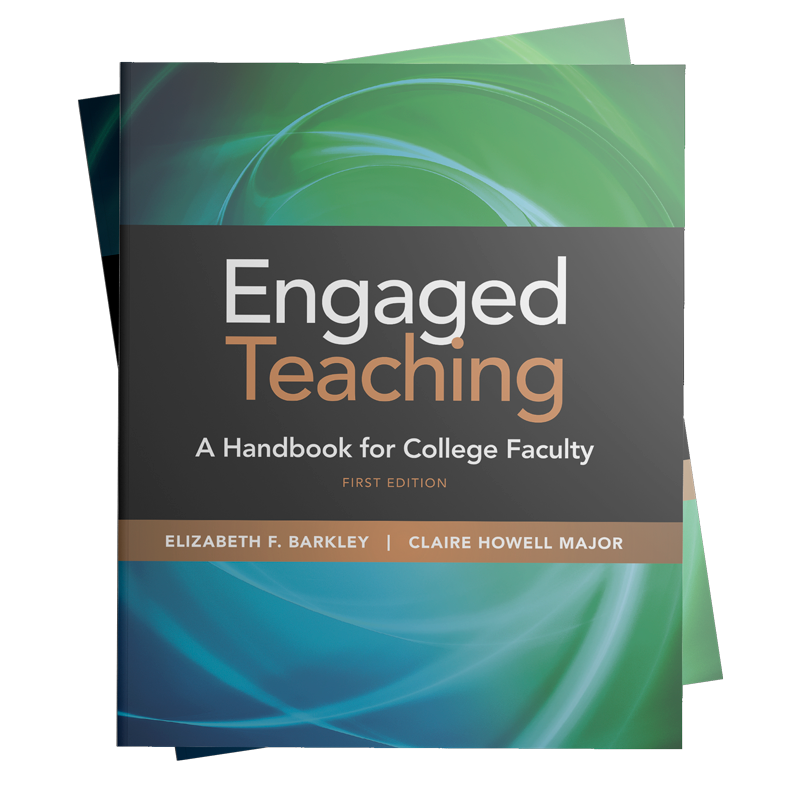
Engaged Teaching
A Handbook for College Faculty
Available now, Engaged Teaching: A Handbook for College Faculty provides college faculty with a dynamic model of what it means to be an engaged teacher and offers practical strategies and techniques for putting the model into practice.
Learn More