Introduction
HyFlex (hybrid flexible) courses have emerged as one way to meet modern learners’ need for personalization and adaptability. HyFlex classes combine face-to-face and online learning by simultaneously offering in-person classroom instruction and virtual synchronous and asynchronous meetings (Beatty, 2019). Adapting to this teaching format has been challenging for many instructors, as maintaining multiple modes of instruction presents complications related to social interaction, tech infrastructure, and cognitive load (Howell et al., 2024; Kuntz, 2025), raising important questions about its long-term feasibility.
However, incorporating principles of HyFlex learning into pedagogical practices is not an all-or-nothing binary. Instead of viewing HyFlex learning as a single course format, its core values can inform course design practices in ways that are sustainable for students and instructors juggling multiple personal and professional responsibilities. Hence, this post explores practical, scalable strategies for designing courses that support flexibility and learner choice, even when full HyFlex implementation isn’t feasible.

Values-Driven Strategies for a More Flexible Classroom
While it may not be possible to provide fully concurrent virtual and in-person class sessions, instructors can apply the principles of HyFlex learning to create more learner-centered courses.
Beatty’s (2019) fundamental values in HyFlex design provide a guiding framework for supporting diverse learner needs. When conceptualized as principles of strong course design, these values empower instructors to successfully create and manage multimodal learning environments:
Learner Choice: Flexibility is the cornerstone of HyFlex design. The techniques below promote giving learners participation options in person and online:
-
Create a Weekly Class Participation Menu
- Students choose how they will participate in class by completing a brief learning activity that aligns with the learning goals for the week. Participation options may include in-class discussion contribution, Perusall annotation, or virtual discussion board post. At the beginning of the week, instructors clearly explain menu options in person and via email.
-
Offer Live and Asynchronous Learning Options
- Learners have the option to either attend class or complete a low-stakes formative assessment online that covers the in-person session’s learning objectives.
Equivalency: Although choice is important, learning outcomes should be equivalent across all modalities in flexible learning environments. Instructors can ensure equivalency through these methods:
-
Align Participation Options with Learning Objectives
- Before providing learners with participation choices, instructors should review course, unit, and lesson-level objectives. Regardless of modality, all available options should clearly align with the same learning outcomes.
-
Use the Same Prompts
- All questions, problem sets, and reflections should be the same, no matter how students answer or complete them.
-
Assess with the Same Rubric
- Although participation activity modalities may differ, rubric criteria should be consistent in terms of effort and comprehension.
Reusability: A common objection to flexible teaching methods is the amount of instructor labor required to be present in both face-to-face and virtual learning environments (Kuntz, 2025). Reusing learning materials in multiple modes of instruction may reduce the pressure instructors experience in person and online. Instructors can reuse course content by doing the following:
-
Post All In-Class Materials Online
- Face-to-face course content, such as slide decks, practice problems, and worksheets, can be posted online without making any changes.
-
Record Answers to FAQs
- Create brief recorded videos (less than 10 minutes) to answer FAQs. These videos can be posted online so that students can watch them outside of class, freeing up valuable in-class instruction time (Kuntz, 2025).
Accessibility: To engage most fully in flexible learning environments, students should have access to course materials both in person and online. Instructors can prioritize accessibility in these ways:
-
Apply the Principles of Universal Design
- Universal Design for Learning (UDL) is the educational application of the fundamental principles of Universal Design, a proactive theoretical approach to accessibility and inclusion that finds its roots in architecture and product design (Tarconish et al., 2023; Barkley & Major, n.d.). Instructors can apply UDL across modalities by writing clear instructions, adding alternative text to images, and providing closed captioning and/or transcripts for video content. UDL benefits all learners, not just those with documented learning differences.
-
Center Strong Instructional Design Practices
- Begin with the end in mind by reviewing all course goals before selecting the technology tools that will be used in the course. Technology should be used to support learning objectives, never for its own sake (“Blended & Hybrid Learning,” n.d.).
-
Provide Asynchronous Attendance Options
- Attendance options should be determined by the activities and their strengths in different learning environments. For example, learning activities that require a presentation component or demonstration may be best suited for in-person sessions, while quizzes or practice problem drills might be completed more efficiently online (“Blended & Hybrid Learning,” n.d.).
Equity: No matter how students complete learning activities, it is paramount they understand course concepts, ask questions, and receive thoughtful feedback on their work. Instructors can take the steps below to ensure equitable course practices:
-
Provide Multiple Avenues to Ask Questions
- Learners may ask questions in class, post to the community discussion board, or email their questions directly to their instructor to receive further guidance.
-
Promote Shifting Modalities Without Penalty
- Students may choose to engage in participation activities in person or online without explanation or justification (Binnewies & Wang, 2019).
-
Explain Course Policies Clearly
- Outline course policies regarding flexible participation and assessment in the syllabus and during in-person class sessions (Winkelmes, 2013; Means & Neisler, 2021). Remind students periodically about these policies through course announcements.

Conclusion
Contemporary learners’ needs are more diverse than ever. Work and family responsibilities make flexible learning options attractive for students who may find it challenging to meet the attendance and participation requirements of traditional face-to-face courses (Bower et al., 2015; Vilhauer, 2021; Cumming et al., 2024).
Adopting HyFlex learning practices not only meets students’ needs for increased flexibility but also provides a pathway for creating a resilient learning environment in times of uncertainty or disruption.
Incorporating these teaching methods into personal pedagogy will inevitably change classroom norms and practices (Beatty, 2019). While some of these changes may initially feel overwhelming, instructors can choose which strategies to implement based on learning objectives and personal comfort level with technology. HyFlex strategies can be incorporated into one module, unit, or learning activity at a time. Imagining flexibility as a principle of innovative course design ultimately helps instructors meet learners where they are in their educational journey.
The blog posts below from the K. Patricia Cross Academy may offer additional strategies for bridging the gap between in-person instruction and online learning:
- Blended Learning: 7 Steps for Success
- This article explains how to intentionally combine in-person and online instruction methods through careful planning. The practical, research-informed tips presented make hybrid learning feel more approachable for faculty and students.
- Engaging and Reaching All Students: Differentiation Techniques in the Higher Education Classroom

- Differentiated instruction offers an approach to better supporting diverse learner needs. The strategies discussed in this post offer practical techniques for creating learning environments that are both equitable and engaging.
- Learning in a Networked World: The Promise of Microlearning
- Microlearning or brief, focused bursts of course content is a learning strategy designed specifically for flexible student access. The techniques discussed in this piece emphasize how accessibility, multimodality, and learner choice might work together to connect in-person classroom activities with virtual learning.
Suggested Citation
Gutenson, L. D. (n.d.). The flexible classroom: A values-driven approach to HyFlex-inspired course design. CrossCurrents. https://kpcrossacademy.ua.edu/the-flexible-classroom-a-values-driven-approach-to-hyflex-inspired-course-design/
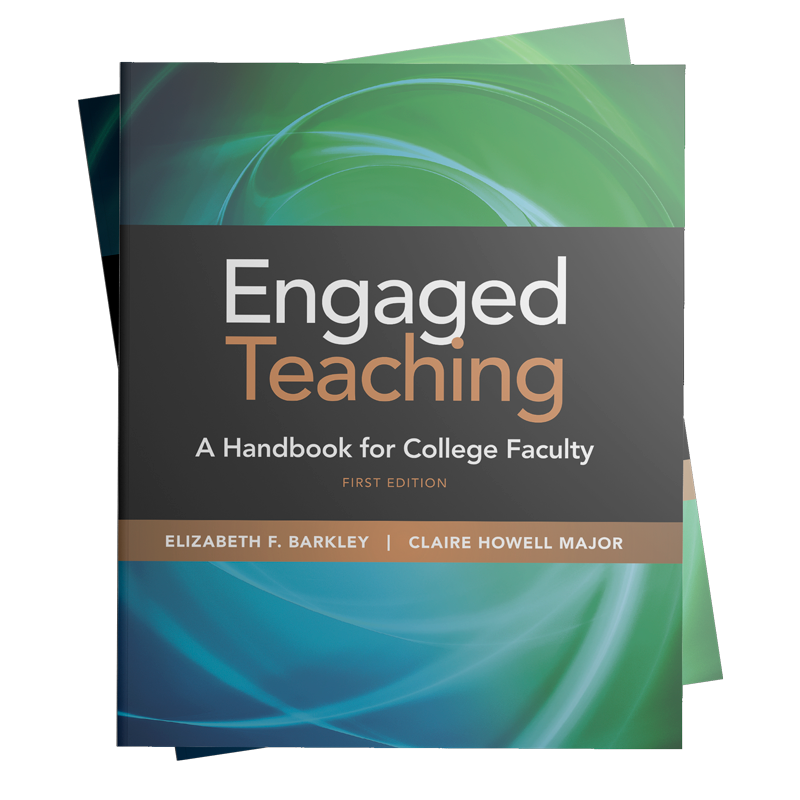
Engaged Teaching
A Handbook for College Faculty
Available now, Engaged Teaching: A Handbook for College Faculty provides college faculty with a dynamic model of what it means to be an engaged teacher and offers practical strategies and techniques for putting the model into practice.
Learn More