

Introduction
Every semester, students with full lives rush to submit work they are not proud of. Consider students who may not be struggling with the material, but whose full lives have kept them from turning in their highest quality of work: a student juggling a full course load and part-time job who runs out of hours in a brutal week; a student mother who simply could not find the time while her child began cutting teeth; or a student who intended to start earlier but whose life circumstances took their focus away from your deadline.
While instructors hope that students will focus on their education first, every student is navigating lives that do not pause for institutional pressures.

Consequently, some instructors are now questioning whether rigid deadline policies accurately reflect how well students meet specific course objectives and whether alternative approaches may be better suited to help them achieve their learning goals. This article offers practical, evidence-based approaches to flexible deadlines that instructors might use to honor learner variability without sacrificing structure or, especially, content proficiency.
Flexible Deadlines: Potential Benefits and Challenges
Flexible deadlines are one way instructors might account for students’ unique life circumstances. This approach recognizes student variability while upending the notion of a singular “normal” student who fails, thereby allowing students to learn the course material even if they are unable to meet traditional deadlines due to constraints beyond their control (Hills and Peacock, 2022). Research has found not only that flexible deadlines account for such variability but also improve student participation, achievement, pass rates, attention to detail, work quality, and perceptions of their instructor, while also reducing student stress (Hills and Peacock, 2022; Hajshirmohammadi, 2023; Wyre, 2019; Ruesch & Sarvary, 2024). However, for students to reap these benefits, instructors must be intentional about how they incorporate flexibility into their courses.
Flexible deadlines are most successful when implemented clearly and consistently (Castro et al., 2022; Verleger, 2023). Adaptive submission windows do not have to abandon structure, nor must they mean that time limits do not exist. Indeed, too much flexibility may undermine a student’s personal sense of responsibility (Walsh, 2019) or create unnecessary confusion (Hills and Peacock, 2022).
Hence, a submission timeline may best be understood not as an open-ended concession but as a course policy that balances student flexibility with clear expectations and firm boundaries.
Research consistently shows that when extensions or flexible due dates are built into course design proactively, students use them purposefully rather than treating them as a free pass (Hills and Peacock, 2022; Schroeder, Makarenko, and Warren, 2019). As students engage with these built-in flexibilities, structure and consistency can remain. Yet, as detailed below, flexible deadlines may help renegotiate the power dynamics between instructors and students.
When implemented astutely, flexible deadlines may also pair well with Universal Design for Learning because they begin from the same premise: that learner variability is a reality to design for rather than an exception to plan around. The KP Cross Academy’s introduction to Universal Design for Learning explores how those principles can additionally shape your course.
Implementing flexible deadlines is not without challenge. Institutions often require grade submission by fixed dates, and extensions beyond those windows require administrative processes most instructors may not be able to easily navigate. Course design presents its own constraints. For example: When assignments scaffold into one another, a late submission on one piece disrupts feedback for the next; group work also ties individual timelines to collective ones; and labs, field placements, and clinical settings require physical presence on schedules that may not be able to bend to individual circumstance. Instructor workload is also a real constraint. Faculty managing high enrollments or having research, publication, and service responsibilities often lack the bandwidth to track and grade individualized timelines. As a result, flexible deadlines may not be available to all instructors. Yet, if you are weighing how you might implement this pedagogical practice into your course, consider the following.

Three Factors to Consider
There are a variety of flexible deadlines models to choose from, but the following three design commitments may make the difference between a policy that supports students and one that creates new problems:
- Build it into the syllabus from the start. Flexible deadline policies work because they apply to everyone equally and are understood in advance. Whatever the flexible date policy is, it should be transparent, universal, and describe what happens if the flexible deadline is not met. Ensure each of these is planned in advance and detailed in the syllabus.
- Consider not asking “why.” Asking students to justify a need for flexibility may itself create a barrier. One group of surveyed students reported needing an extension at some point, but the discomfort of asking or feeling their reason was not good enough was a barrier to seeking this form of support (Hills and Peacock, 2022). A policy that removes justification could eliminate that obstacle entirely and frees the instructor from making judgment calls.
- Maintain a predictable feedback rhythm. Deadlines are not arbitrary enforcement; they exist so that instructors can return timely feedback and so that students can use that feedback to improve subsequent work. Communicating that logic clearly helps students make informed decisions about when to utilize flexible deadlines.
Common Ways to Implement Flexible Deadlines
There is no single right model for flexible deadlines. The best fit depends on course structure, class size, assignment sequencing, and an instructor’s workload. The following options represent a range from minimal to more extensive flexibility.
- Due windows replace a strict timestamp with a 24 to 48-hour submission range, giving students modest flexibility without altering the assignment’s place in the course sequence. However, one scholar found that this less-flexible approach, if used for quizzes or exams, still led students to procrastinate until the end of the window (Conner, 2024).
- Grace periods offer one or two automatic, no-questions-asked extensions available to all students across the term. Students simply submit within the grace window, and the instructor checks submissions once that window closes.
- Rolling deadlines give students a defined set of dates from which to choose their own submission window. An instructor might offer three or four possible submission dates spread across a two-week window, and students self-select the one that works best for their schedule.
- Late banks allow students to draw from a pool of days, typically three to five, to use on designated assignments without penalty and without explanation. Students note in their submission how many late days they are using and track their own remaining balance, keeping the administrative burden on the instructor minimal.
- The self-advocacy extension model is the approach this author created and uses in her own courses. In this model, students email the instructor before the original deadline to indicate that something has come up and to propose a new date by which they can submit strong work. No explanation is required; only the communication itself and a realistic proposed timeline are needed. The instructor simply marks that on their calendar to return to grade following that date. This policy invites students to develop the professional capacity to anticipate, plan, and communicate proactively. While this approach maps directly onto the self-advocacy skills students will need well beyond the course, it still accounts for instructor oversight.
- Student-designed course calendars represent the most expansive approach, where students collectively negotiate the assignment schedule at the start of the term. This approach works particularly well in smaller seminars or project-based courses where students are already functioning as a learning community. This model pairs particularly well with project- and problem-based learning and connects to a larger conversation about what we ask students to demonstrate and how.
If flexible deadlines ask us to reconsider how learning measured, the KP Cross Academy’s piece on rethinking classroom assessment pushes that question further by examining how and through what kinds of tasks students demonstrate it.

When Deadlines Are Still Not Met
When a student misses even a generous extended timeline, the response should follow the same principles as the policy itself: structured, consistent, and centered on learning rather than punishment. The first step is simply to reach out, since a missed deadline is often a signal that something significant is happening in a student’s life. From there, the question worth asking is whether the assignment can still serve its learning purpose.
Accepting work late, even without a grade, may serve a student’s learning better than a zero would, a question the KP Cross Academy’s piece on reconsidering assessment and ungrading explores in depth. Whatever the consequence, it should have been stated in the syllabus from the beginning, decided by the course policy rather than in the moment.
Conclusion
Flexible deadline policies do not eliminate the tensions of managing a course. Instead, they redistribute responsibility more fairly across course design and student agency.
When deadlines are built thoughtfully into a course from the start, made transparent and accessible to all students, and designed to serve learning rather than enforce compliance, they stop being a point of conflict and may begin to foster more trust between instructors and students.
The question is not whether to have structure; it is whether the class structure supports every student to learn the course content.
Suggested Citation
Morris, S. J., & Gutenson, L. D. (n.d.). Rethinking deadlines: Exploring practical approaches to flexible due dates. CrossCurrents. https://kpcrossacademy.ua.edu/rethinking-deadlines-exploring-practical-approaches-to-flexible-due-dates/
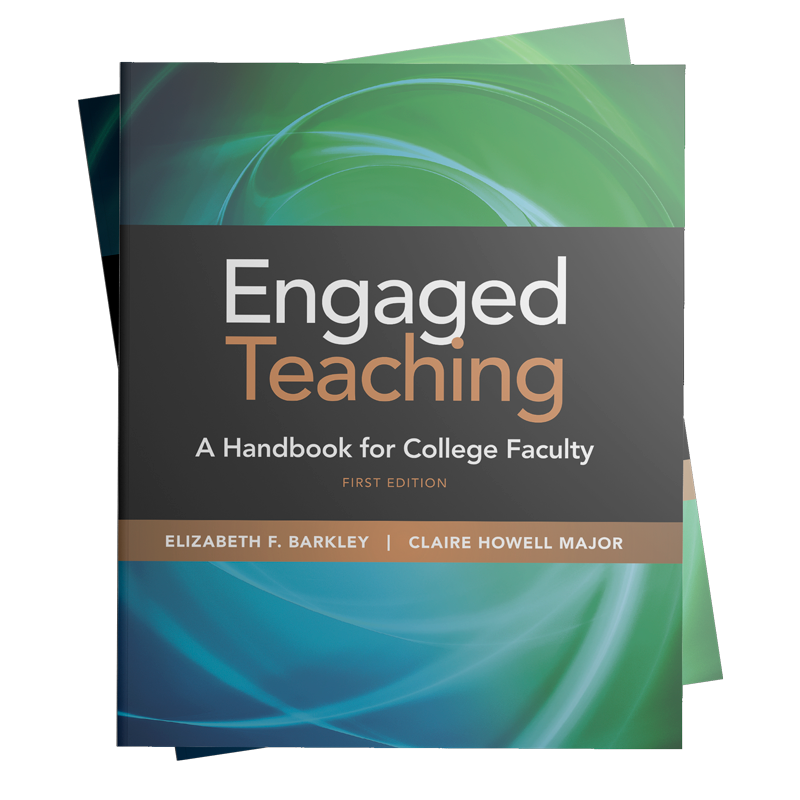
Engaged Teaching
A Handbook for College Faculty
Available now, Engaged Teaching: A Handbook for College Faculty provides college faculty with a dynamic model of what it means to be an engaged teacher and offers practical strategies and techniques for putting the model into practice.
Learn More